
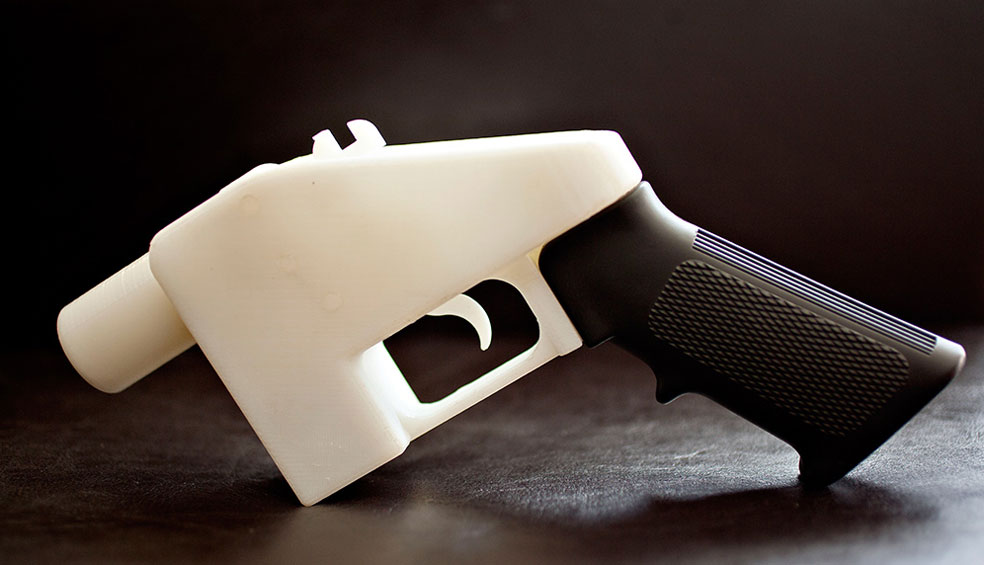
Last week a Seattle district judge blocked the release for plans of a fully 3D printed gun. The gun called “The Liberator,” originally had plans on the web in 2013 but the state department demanded that designers remove the schematics from the public domain. After a lengthy legal battle with the state department, the gun’s blueprint was set to be available to the public on August 1. Now a restraining order blocks its release and the debate on 3D printed guns continues.
Dr. Anthony Fleming, with the University of West Georgia political science department, is an expert on US gun control policy. He said that this is not just a second amendment issue.
“My understanding is that the ability or the understanding on how to make an undetectable gun like a 3D printed gun, it is ok to know about it. It is a first amendment issue as much as it is a second amendment issue,” said Fleming.
Fleming also noted that plastic guns would violate federal laws already on the books:
“The actual manufacture of an undetectable gun, that would violate the Undetectable Firearms Act of 1988. That act actually says that any gun that cannot be detected by a metal detector would be illegal. That includes the manufacture, selling or trading of a firearm. To me a 3D printed gun would be considered an undetectable firearm.”
Fleming says that the technology of 3D printed guns is unreliable at best and more expensive than most other firearms. He suspects that “The Liberator” will not contribute to a large amount of crimes.
 lukelukert.com